Skip to content
ST-1

ST-1 Semi-Dry Transfer Unit

Transfer proteins in as little as 90 minutes using less buffer.

ST-1
ST-1

Key Features

Product Details

  • checkMark
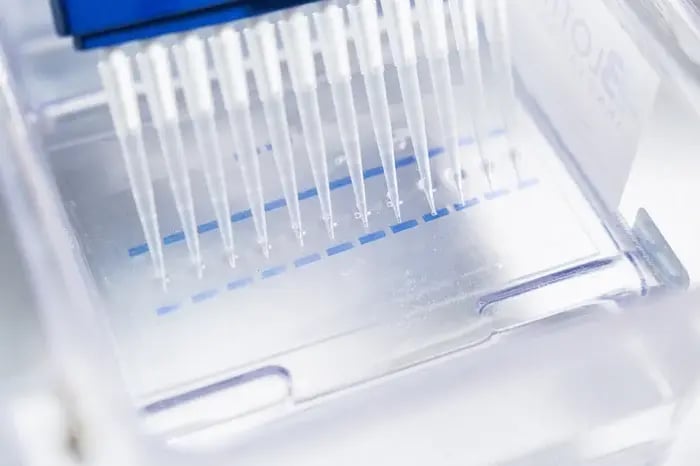
    Semi-dry transfer unit for rapid, efficient transfer of proteins from G-Blot precast gels to nitrocellulose or PVDF membranes.
  • checkMark
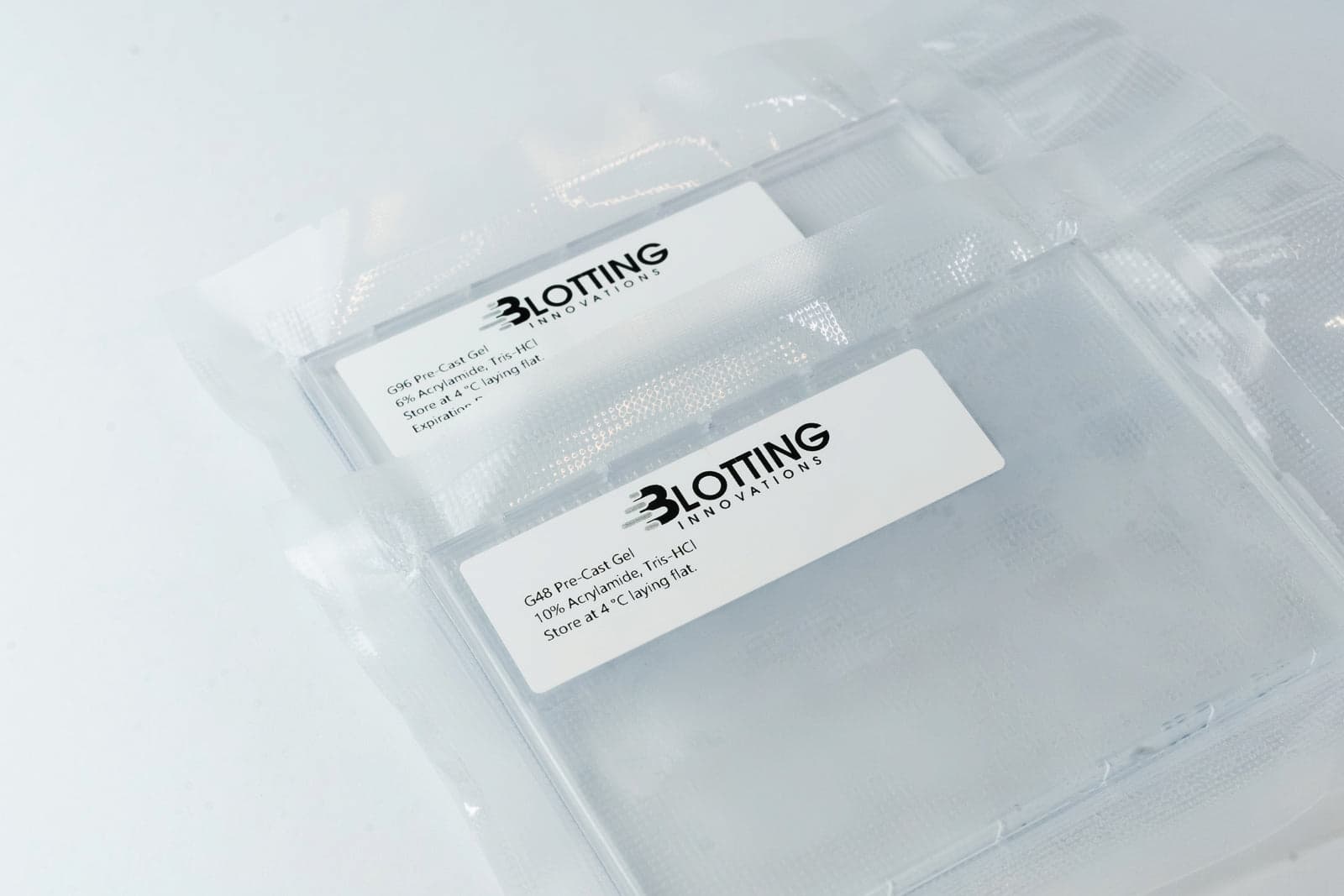
    Optimized for use with G48 and G96 precast gels — transfer area precisely accommodates G-Blot membrane dimensions.
  • checkMark
    Completes transfer in as little as 90 minutes, with no additional cooling device required.
  • Check Mark
    Requires significantly less buffer than traditional tank (wet) transfer methods.
  • Check Mark
    Auto shut-off when lid is opened for safe operation.
  • Check Mark
    Pair with the G-Blot 2.5× Semi-Dry Transfer Buffer (STB-1-10) for optimal results.

Specifications

  • Check mark
    Transfer area: 140 × 140 mm
  • Check mark
    Dimensions (L × W × H): 185 × 175 × 40 mm
  • Check mark
    Weight: 1.4 kg
  • Check mark
    Voltage limit: 30 V
  • Check mark
    Power limit: 30 W
  • Check mark
    Current limit: 1000 mA

Need answers?

Frequently Asked Questions

How long are the gels stable?
Our precast gels are stable for at least 1 year from the casting date, denoted on each gel as the expiration date.
Are custom gels available?

Yes, gels can be customized with different amounts of acrylamide depending on your protein separation needs.

Please contact us for any custom requirements and we will be happy to investigate possibilities.

What power supplies are compatible with the HT-1?
The HT-1 is compatible with standard lab power supplies using banana plugs. Recommended specifications include adjustable voltage and current up to 100 V and 400 mA, and at least 75 W of power.
What transfer methods are compatible with the G-Blot?
You can use either semi-dry or wet transfer, as long as your transfer unit is the right size.
Should I use nitrocellulose or PVDF membranes for transfer?

Both membrane types are compatible with the G-Blot. The best membrane for your experiment will depend on your target proteins, detection methods, and antibodies.

How is the sensitivity compared to a traditional western blot?

The G-Blot has equivalent sensitivity to a traditional western blot (Birtwistle et al., 2025).

Ready to Accelerate Your Workflow?

Order Now